
13.11.2026
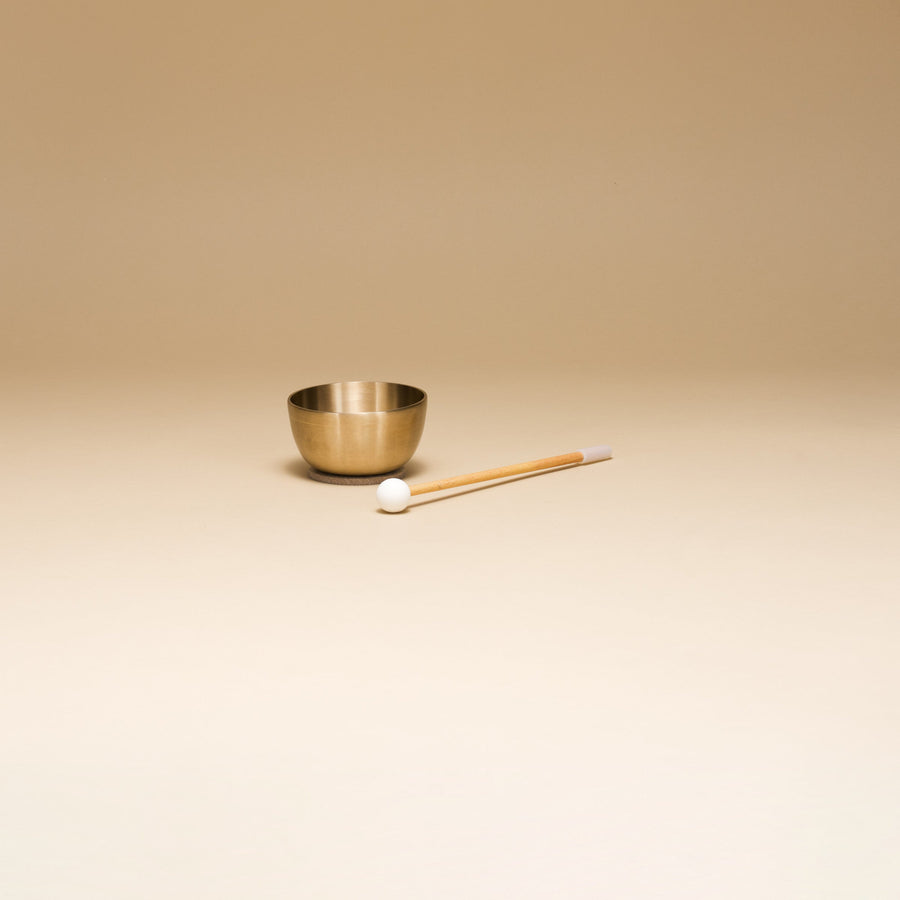
Morgenritual mit Tiny Bowl: 7 Minuten ohne Handy
Ein siebenminütiges Morgenritual mit Tiny Bowl, einer kleinen Frage und einem bewussten Start in den Tag – ohne Handy.
Weiterlesen →
A message comes in. I don't like the tone. An email makes a demand I didn't expect. During a conversation, someone says something I want to respond to immediately.
In moments like these, speed isn't always helpful. Not every reaction needs to happen in the same second as the stimulus.
The older post “Dealing with stress” on Goed eten Gezond leven describes a small pause before automatically reacting as its core idea. I don't want to turn this into an anti-stress promise. I'm interested in the version that works in everyday life: Can I take a minute before I respond?
Sixty seconds won't solve a problem. They won't make an unpleasant email any friendlier either. But they can prevent me from immediately turning my initial impulse into a final response.
This is especially useful in digital communication. A sent message is harder to take back than a thought that stays in your head for one minute longer.
The first step is simple: don't type. Take your hand off your phone, let go of the mouse, look away from the screen for a moment. In a conversation, this might mean taking a sip of water or simply saying, “One moment.”
It's not about being performatively silent. It's just about briefly interrupting the automatic movement to respond.
Instead of immediately judging, I try to state it as neutrally as possible: “The email asks for a response by today.” Or: “The comment annoyed me.” Or: “I don't know what is meant right now.”
This separates observation from interpretation, at least for a moment.
For twenty seconds, no technique needs to happen. No perfect breathing pattern, no visualization, no mantra. Just sit or stand, breathe normally, and don't start the response yet.
I think this part is particularly important, because otherwise every small pause immediately becomes the next optimization exercise.
Now I only decide between three ways:
All three are legitimate reactions. Immediacy is not automatically professionalism.
When I respond, I first write only the first sentence. For example: “Thank you for the message, I'll check that briefly.” Or: “I want to make sure I understood the point correctly.”
A neutral beginning often gives the rest of the response a different tone.
The principle doesn't just apply to emails. A minute can also prevent small everyday frictions from immediately turning into arguments. Sometimes it's enough not to keep talking from the hallway, but to first put down your jacket and bag.
The living environment can support such transitions. That's why the second part of this series was about a home with fewer simultaneous stimuli.
Of course, there are situations where immediate action is necessary—for example, when safety is involved. And persistent, severe stress cannot be “fixed” with a 60-second ritual. This small pause is merely a tool for normal hectic everyday moments.
What really relaxes you? 6 ways to a suitable pause · More calm in the room · Don't react immediately: the 60-second pause
For me, the three topics belong together directly: choose a pause that suits the day; don't unnecessarily overload the environment; and don't send every reaction immediately.
About DI: DI is the editorial pseudonym of the founder of SteinKunstWerk. He writes about small rituals, scent, living atmosphere, and conscious moments in everyday life.
Ein siebenminütiges Morgenritual mit Tiny Bowl, einer kleinen Frage und einem bewussten Start in den Tag – ohne Handy.
Weiterlesen →
So gestaltest du eine kleine Klangreise zuhause – mit einer einzigen Klangschale oder mit drei verschiedenen Tönen.
Weiterlesen →
Zwölf Minuten für frische Luft, eine freie Fläche und einen sanften Klang: ein bewusstes Frühlingsritual für zuhause.
Weiterlesen →
Kommentare
Kurze Gedanken zählen. Wenn du magst: setz den ersten Ton – oder antworte direkt mit @Name:
Pro-Tipp: Wenn du jemandem antworten willst, starte mit @Name:
Mach aus dem Lesen ein Ritual.
Wenn dich der Beitrag gerade trifft: nimm die Stimmung mit – als Duft, Deko oder Geschenkidee.
Mach aus dem Lesen ein Ritual.
Wenn dich der Beitrag gerade trifft: nimm die Stimmung mit – als Duft, Deko oder Geschenkidee.
Passt der Beitrag zu dir?
Zur Kollektion